
“Anthologies of contemporary poetry, like new cars, run the risk of being obsolete within a couple years. My hope is that this one will have the lasting power of a Volkswagen at least.â€
-A. Poulin, Jr., Contemporary American Poetry (1971)
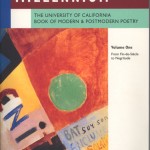 As anthologies go, the monstrous Poems for the Millennium, Volume Three: The University of California Book of Romantic and Postromantic Poetry (2009), edited by Jerome Rothenberg and Jeffrey Robinson, is a Hummer pretending to be a hybrid. Combined with its sturdy predecessors, Poems for the Millennium: The University of California Book of Modern and Postmodern Poetry, Volume One: From Fin-de-Siecle to Negritude (1996), and Volume Two: From Postwar to Millennium (1998), edited by Rothenberg and Pierre Joris, with 2600 combined pages, they are a fully-loaded triple trailer.
A carrier we can use for the long haul, or a threat to others on the road? At the beginning of the new millennium, we have some time to sort it out. This is my shakedown run.
I love poetry anthologies, for reasons that can’t be duplicated with anthologies of fiction or essays. A lyric poem, after all, is itself a work of assemblage, each line a careful choice of image and word held in balance for a breath, framed in tension or in harmony with lines before and after, rounded swiftly to the close. The poetic line is a product of selection; the poem an anthology of lines. In a good anthology, we sense, in the swift space of a few poems, the range or depth of the poet, the clash or harmony of theme and emotion. In half an hour we explore the unique geography and weather of two, four or half a dozen poets, landscapes wild or domestic, an experience that can be over- or underwhelming depending on the curatorial skill of the anthologist.
No other anthology offers the same sense of immediacy or range. I very seldom read fragments or segments of novels in progress. I don’t even like isolated short stories; I need to read several at a go to feel connected to any one. So I wait for new collections by Alice Munro and T.C. Boyle, rather than read their stories singly in The New Yorker or Harper’s.
Anthologies have been the lifeblood of American poetry, the venerable Mississippi of American poetry, though poets and readers may not realize it fishing the thousands of miles of the hundreds of tributaries, pulling up sunfish and an occasional trout. Though the internet may have changed that somewhat, providing broad access to poetry and poets, there is nothing like the compact, well-thumbed anthology to provide the casual intimacy that precipitates the shock of recognition – a new poet! The discovery of good poetry is incidental to that kind of casual exploration.
Poetry also has fewer readers and wider diversity, and needs the cross-fertilization an anthology provides. I’m guessing wildly here, but if you ask 25 readers to name the top 25 fiction writers in America, I’d expect two-thirds of those named would be the same but in a different order. Ask 25 poetry readers to name the top 25 American poets and perhaps only half a dozen would be the same, and some lists might have no common names.
There are all kinds of anthologies. Some explore eternal themes such as love and anti-war. Some are gender or ethnic collections. Others are simply the 101 “best loved†poems of the last year, decade or century. Some are designed for college classroom use, providing surveys of canonical poets and representative poems, often winding a poet’s reputation tightly to a few poems before they’ve hit their stride. Some anthologies are school or movement oriented, both recognized and obscure: Futurists, Surrealists, Objectivists, Beats, confessional, or language poets. Most – and, interestingly, some of the best – are very polemical, arguing for a certain kind of poetry. Classrooms never do justice to this volatile aspect of contemporary poetry. I’m not sure how you can educate yourself in the broad landscape of American poetry, all its streams, other than through the anthologies of the day, serially “new†and “recent,†and then old and dusty and obscure in all their wild diversity.
I’m seldom more than a few feet from a poetry anthology (or a battered copy of Four Quartets, an anthology of sorts). How else to fill the time when you have a minute or two to spare, waiting for something or someone, and you crave intellectual nourishment, but a novel is too much and a Luna bar wrapper too little?
Continue reading Call me anthological
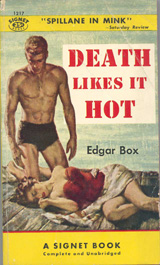 It’s a great idea, and it’s hers, and no way am I going to steal it, because that would be so wrong. But just this once I’m going to borrow it, because after putting new shelves in the office I’ve been restocking some books that have been sitting in boxes in the basement, and that includes pretty much my entire collection of mysteries, which I’ve now been taking out selectively and re-reading with pleasure.
 Today, as much of the world is eager to tell you, is William Shakespeare’s 445th birthday. The Bard of Avon, the Sultan of Stagecraft, the Titan of Tragedy, the Crown Prince of Comedy was born beneath a twinkling star on this day, April 23, in the Year of Our Lord 1564, whereupon he was wrapped in swaddling clothes and laid in a manger, and …
 All right, so I’m jumping to conclusions based on the thinnest of evidence. Which is pretty much, we here at Art Scatter tend to believe, exactly what the anti-Stratfordians have been doing all these years. The most rational response to this whole dust-up, we tend to believe, is that the guy whose name is on the cover actually wrote the stuff inside. But we also tend to think that, unless you own stock in downtown Stratford-Upon-Avon, which has a huge vested interest in the local boy actually being who he said he was, it doesn’t make a lot of difference. The play’s the thing. And the plays aren’t going away. (As a side note, Art Scatter would like to declare that we approve mightily of the historical existence of a character named Vicar Bretchgirdle. Did the good vicar know Sir Toby Belch?)
 Yes, charmed. And I thought, this is policymaking outside the channels of policy. Here, in Obama, is a man utterly at ease inside his own skin. That’s why people respond to him. Because he’s comfortable with himself.
 On Friday night, the Portland experimental music group Fear No Music performed a selection of short pieces that went with a selection of short films and video. We were there.
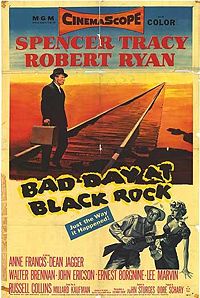 Stop me if you’ve heard this one before. There are two plots, it is said: Someone Goes On A Trip and Stranger Comes To Town. That’s one plot, actually, with two points of view. Stranger must go on trip from some other town in order to come to ours.
 A person of my close acquaintance (all right, she’s my daughter) has been laid off from a job she detests — indeed, a job which for at least a couple of years she’s harbored elaborate fantasies of quitting in grand-tragedian style. They beat her to the punch. She outlasted many of her friends at this Dilbertian company, who, she says, have created a greeting for new members of the formerly-employed-by-idiots club.