Classical music and the Portland Cello Project

Filed under:Barry Johnson, General, Music — posted by Barry Johnson on September 3, 2008 @ 6:47 am

I’m not sure why I’m so fascinated by the problems of classical music. Possibly it’s just that it’s hard not to root for an art form that seems to be running so against the drift of the culture itself. I say seems not to waffle but to suggest that it’s not too late for a little adaptation.

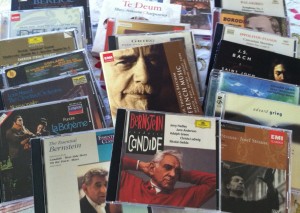
A William Weir story in the Chicago Tribune today starts with an account of the difficulty composer Kenneth Fuchs has broadcasting his music out into the world — and Fuchs is well-known as far as contemporary composers operating in a “classical” context go. He then suggests that the answer for Fuchs may be to get his music out of the “classical confines.” I disagree with him that the death of classical music stores is a good thing, but his suggestion that the blurring of genre lines that separate classical from other kinds of music does sound right. He then cites a few new-music organizations such as Bang on a Can and the Wordless Music series as examples of moves in the right direction, as well as cellist Matt Haimovitz, who couldn’t be more popular among the country’s few remaining classical music critics because he is so involved in both genre destruction and operating outside traditional classical music confines.

This leads us, inevitably to the Portland Cello Project, which went to the top of Amazon’s classical music chart this weekend per the group’s website. Congrats! I’ve listened to Cello Project’s CD a lot the past couple of months, and it is a movement in genre-blurring all by itself, a mix of hip-hop, folk, indie, old classical and new classical, by turns witty and moving. The PCP invited several other excellent local musicians to play on the record, so if you’ve been lagging behind the local music scene a little bit, the CD helps catch you up.

Maybe it’s simply a matter of what’s in a name. “Classical music” just doesn’t work very well for me. No thanks, I want to say. On the other hand, Mozart’s Quintet in C Major or the Mahler Nine? Huzzah! Right now, I’m listening to one of the concerts in the Worldless Music Festival, via their website (the link’s above). Is it “classical”? Not completely — Chopin and Scriabin, yes, but also French composer Colleen’s eerie music and the indie band Beirut. But it is surprising, complex, engaging to ear and mind and heart. The jump from one form to another isn’t jarring, not in these days of the iPod shuffle. And that perhaps is one of Weir’s points in the Tribune today: Part of our brain wants desperately to categorize things; the other part happily disregards those categories in practice.

A bridge too far: Connecting Portland’s performance halls

Filed under:Bob Hicks, Dance, Environment, General, Music, Theater, Visual Art — posted by Bob Hicks on September 2, 2008 @ 4:05 pm

“While you’re catching up on weekend papers,” our blogging compatriot Mighty Toy Cannon of Culture Shock writes, “I’d be interested in your comments on the Oregonian editorial regarding the renovation of the Schnitz and the possible enclosure of the Main Street Plaza (Saturday, August 30).”

As Mighty Toy points out, the editorial got lost not only by running on a Saturday but also because it was buried beneath the flurry of news about vice presidential nominee Sarah Palin (pre-grandma version) — and wasn’t that an artfully worded baby announcement, by the way.

The editorial’s gist is this: Even though most Portlanders could care less about the symphony and opera and ballet, these things are important to our economy and our sense of civic pride. The city’s most prominent performance space, downtown’s Arlene Schnitzer Concert Hall, is in need of big fixes — at least $10 million, maybe a lot more — partly because its acoustics are subpar, and it’s used 60 percent of the time by the Oregon Symphony, a group for which acoustics are exceedingly important.

So far so good. But then the editorial gets down to what really seems to excite its author: the possibility of reviving the idea of some sort of bridge between the Schnitz and the theater building that houses the Newmark and Dolores Winningstad theaters right across Main Street. It’s an idea that was part of the original 1982 blueprints for the Portland Center for the Performing Arts but was scrapped for financial reasons. And it would include permanently blocking off Main between Broadway and Park Avenue to create a plaza that would connect the two buildings.

“In the offing now,” the editorialist writes, “is an opportunity to finally connect the two buildings, to animate their too-often-dormant lobbies, to cleverly create downtown’s long-sought ‘gateway’ to its cultural district.”

OK, first a little history. When the performing arts center was being planned in the early 1980s, it was all to be built on land donated by Evans Products adjacent to Keller Auditorium, which was then known as Civic Auditorium. That plan would have created a Portland version of Manhattan’s Lincoln Center for the Performing Arts — an arts cluster near downtown but not quite at its center. And except for the old Civic, all the halls would be built new, so the acoustics and seating would be up-to-date and you wouldn’t run into any of the surprises and compromises that go along with historical renovation. (The Schnitz at the time was known as the Paramount, and was a shabby onetime vaudeville and movie house that was being used for rock ‘n’ roll concerts.)

But downtown business and political interests pushed through a swap so the new center would be housed instead along a stretch of Broadway that had become run-down, creating an economic spur to help the center of the city out of its recession doldrums. The Paramount, with all of its problems, became the key player in the switch, and the city took over the block across from Main to build its two smaller theater spaces. Economically, the plan worked like a dream (for the business district, at least: the arts center itself, and the companies that used it, still suffer because the center’s financial structure covered only the costs of construction, with no regard for maintenance or operation).

Flash forward to 2008 and the latest push to create a “gateway” to the cultural district, which also includes the Oregon Historical Society and the Portland Art Museum along the South Park Blocks. And forget for the moment the nasty realities about actually funding any sort of project, because that’s a subject far too complex for this post. As the Oregonian editorial stresses, it would require plenty of individual, corporate and foundation support in addition to tax money.

(more…)

Pre-Labor Day Scatter: Red shoes, hot peppers, art scams

Filed under:Bob Hicks, Dance, Film, Food, General, Music, Visual Art — posted by Bob Hicks on August 31, 2008 @ 8:44 pm

So here it is just hours before Labor Day (to be celebrated by much of America by a trip to the mall, where many people will be working for minimum wage or a skoosh over it) and this corner of Art Scatter is thinking about a few things.

Such as Josh White, who is playing on the stereo (we reveal our age by using such an antiquated term), who has just finished singing and playing “Strange Fruit” (if you think Biilie Holiday’s astonishing version is the whole story, give this one a listen) and has moved on through his hilarious, haunting “One Meat Ball” and is now into his definitive “St. Louis Blues” and — hold it — a killer “Careless Love.”

And Art Scatter’s wife’s amazing ability with a dirty martini.

And the hot peppers of Hatch, New Mexico, where his 92-year-old father lived for two years in the 1920s, and one of which has entered a soup still simmering on the Art Scatter stove, and which (the town, not the pepper) this corner of Art Scatter did not visit on a recent eight-day trip to Santa Fe and environs, which experiences this corner of Art Scatter will discuss shortly. (A shout-out to Southwest Airlines, perhaps the last of the decent air carriers.)

And now Josh White is singing “Jesus Gonna Make Up My Dyin’ Bed,” and this corner of Art Scatter could almost die happy.

But not before recommending a few things.

Such as Alistair MacAulay’s excellent revisit to the 1948 Michael Powell/Emeric Pessenburger movie The Red Shoes, which Friend of Art Scatter First Class Martha Ullman West has recently promoted as one of the greatest movies of all time. If you’ve done what we often do on holiday weekends and let your newspaper sit untouched, do pick up your Sunday New York Times.

You’ll also find in your Sunday Times a wonderful story by J.D. Biersdorfer about a late 18th century art scam that pulled in the American painter Benjamin West and eventually other leading painters with its promise of revealing the secrets of the great Venetian ancients. It was, of course, a hoax, of P.T. Barnum proportions. A ruefully delightful tale.

Finally, check out Friend of Art Scatter D.K. Row’s challenge to the Portland art scene in the Sunday Oregonian, a piece bemoaning the city’s lack of a contemporary art center to goose the city’s art scene and push it into the national mainstream. We couldn’t agree more. The city that thinks it’s cool has a long way to go, and it’s lucky it has a few people like Row to speak the truth to its press-ageantry-lulled sense of self-satisfaction.

Happy Labor Day!

Those tasty Tuesday hotlinks, well-scattered

Filed under:Barry Johnson, General, Music, Visual Art — posted by Barry Johnson on August 12, 2008 @ 7:05 am

While you continue to hone your answers for the “movies that move me” confessional below — more! we want more! (it’s kinda getting a little Bruno Bettelheim-y in there) — we have some refreshing links from home and abroad.

Let the celebrity conduct Maybe this is “only on the BBC” but a new reality show is hoping to bridge the gap between classical music and pop culture by enlisting some UK celebrities, most notably drum’n'bass inventor Goldie. The key moment in the Scotsman’s story: “A giant, shaven-headed fellow with an imperious demeanour, he is dressed in a yellow T-shirt, tracksuit bottoms and trainers. Gold teeth glint from his mouth. Yet the moment he launches into conducting, I – and the entire orchestra – are spellbound.” And now I’m thinking who I’d reallywant to see conduct the Oregon Symphony…

Kindle, the new iPod? Wired speculates on the fate of Amazon’s Kindle e-book reader, which apparently is starting to gain traction in the universe. I’ve briefly pondered its fate before on Scatter, and Wired is rather dismissive. But still…

Art in The Oregonian Because of my professional affiliations and all, I don’t usually do this, but I gladly send you off to four recent visual arts stories by my comrades: Bob Hicks takes on Andy Warhol at the Maryhill Museum, D.K. Row on Portland sculptor/icon Lee Kelly, and Inara Verzemnieks on the 100th Monkey Studio’s mischief art show and on Caldera’s Hello Neighbor street art project.

And now, without further interruption, descend one post and tell us about your movie past!

Ashland report: fabulous cockroach, deadly deceiver

Filed under:Bob Hicks, General, Music, Theater — posted by Bob Hicks on July 18, 2008 @ 9:38 am

Sure, Franz Kafka’s Gregor Samsa is a brilliant conception, one of the touchstones of 20th century thought. But when it comes to literary cockroaches, my heart belongs to Archy. A free-verse poet, an ink-stained wretch, a nervous moralist of the demimonde, an insect in love with a slatternly cat, Archy first saw the light of print in a 1916 column by New York Sun journalist Don Marquis, who stuck by the little fellow and his feline companion, Mehitabel, through hundreds of columns and a few book collections until Marquis’ death in 1937.

If The Metamorphosis is a comic nightmare vision of the dehumanizing essence of modern culture, Archy and Mehitabel is a sadly knowing comic ode to optimism, and as such, a much more American tale. Life on Shinbone Alley, the little fetid corner of New York where Archy and his pals hang out, has a mythic quality, and the myth that comes to mind is Sisyphus: always reaching for the top, always falling back into the same old muck, always dusting off and starting the journey again. For Mehitabel the sensualist, hope is just another alley cat away. For Archy the world-wise, despair and joy are almost the same thing, and like a Beckett character but with a good deal more joie de vivre, he can’t go on, yet on he goes.

Archy, as Marquis tells the tale, just showed up one night in the Sun newsroom and, choosing Marquis’ typewriter because the columnist seemed “a little less human” to him than most humans (a race with which he held little truck), proceeded to relate the stories of Shinbone Alley. To do this required a good deal of physical pain. Archy climbed onto the keyboard and flung himself headfirst onto the keys in order to type out his first-hand reports of life on the dangerous but always fascinating streets. He wrote everything in lower-case because he couldn’t hit both a letter key and the shift key at the same time. At least he didn’t have to worry about an editor, and that alone endeared him to the corps of semi-anonymous reporters who flung their own heads against the immutable forces of the newsroom in order to record straight the tragedies and comedies and everyday occurences of the strange boisterous brute that was the big city.

What brings Archy back to mind is a visit to the Oregon Cabaret Theatre in Ashland, a spiffy space carved out of a onetime Baptist Church building just a couple of blocks away from the grounds of the Oregon Shakespeare Festival. The cabaret’s current show is a revival of Archy and Mehitabel, a lightly jazzy, hipsterish 1950s musical adaptation of Marquis’ columns. A sly fusion of the strain of sardonic optimism that flavored the United States of both the 1920s and the 1950s (decades in which a lively underworld put the lie to the official order of standardized moralism), Archy and Mehitabel provides a pleasantly raffish break from the shows at the Shakespeare festival and also fits neatly with them: After all, like the classics that the festival embraces, the enduring qualities of Marquis’ cockroach and cat are built upon a masterful scaffolding of words, words, words. (The festival and the cabaret have always enjoyed a sort of cross-fertilization of talent. In Archy and Mehitabel, stalwart festival actor Michael J. Hume is the highly effective taped voice of Don Marquis, setting the stage with brief interludes of narration.)

(more…)

Ashland report: singing twins, a military hero gone wrong

Filed under:Bob Hicks, General, Music, Theater — posted by Bob Hicks on July 16, 2008 @ 12:41 pm

In 1938, when Richard Rodgers, Larry Hart, George Abbott and George Balanchine brought The Boys From Syracuse to Broadway, no one had ever before made a successful musical from a Shakespeare play. And Boys, a free and breezy adaptation of The Comedy of Errors, was successful. Its jazzy score landed several songs — Falling in Love With Love, He and She, This Can’t Be Love, Sing for Your Supper – in the Great American Songbook, to be picked up and played around with by interpreters as diverse as Mel Torme, Oscar Peterson and Sonny Rollins.

But while Boys paved the way for such later hits as West Side Story and Kiss Me Kate, and helped inspire many more musical adaptations of Shakespeare’s plays, including Arne Zaslove’s popular Twelfth Night with Gershwin tunes for the old Bathhouse Theatre in Seattle in the 1980s, it hasn’t had a lot of revivals. New York’s Encore series of staged musicals produced and recorded a top-flight version in 1997, but a 2002 Broadway revival by the Roundabout Theatre Company was by most accounts (I didn’t see it) badly botched.

Too bad. I’ve listened to the music a fair amount, but I’ve seen a production of The Boys From Syracuse only once, years ago at the Stratford Festival in Ontario, and it’s left me longing to see it again ever since (like another Rodgers & Hart show, 1940’s Pal Joey, which also has a terrific score and is rarely revived).

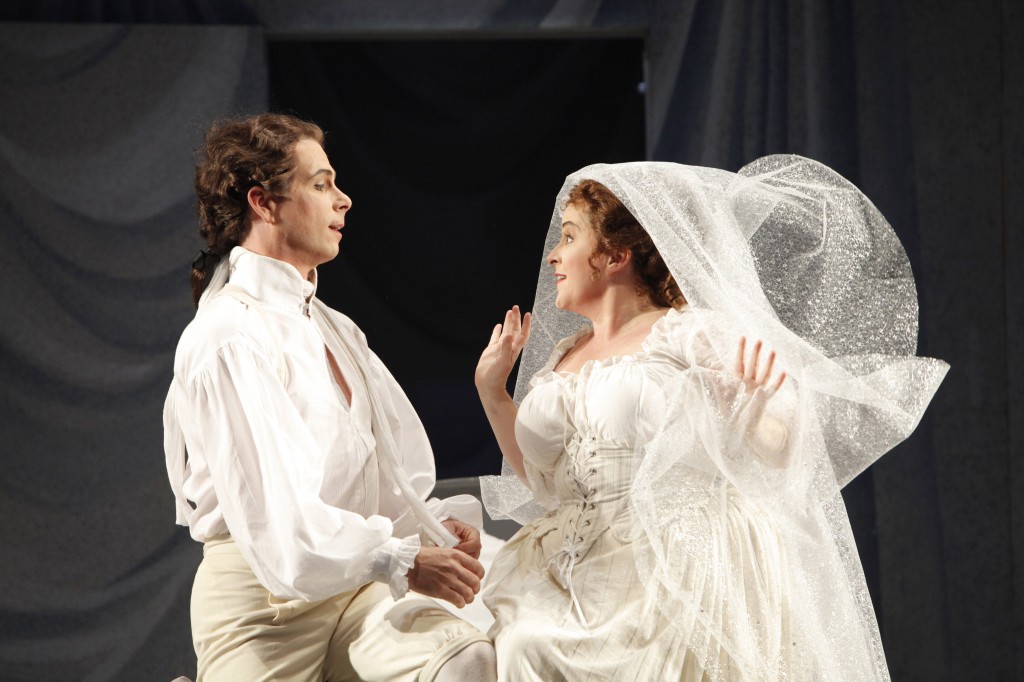
The Oregon Shakespeare Festival’s new outdoor production of The Comedy of Errors isn’t The Boys From Syracuse. But it is a free musical adaptation of Shakespeare’s comedy (which was itself an adaptation of a Plautus comedy from ancient Rome), and it has its considerable charms.

(more…)

Back to the caves for some paleolithic multi-media

Filed under:Barry Johnson, General, Music, Visual Art — posted by Barry Johnson on July 12, 2008 @ 8:31 am

Art Scatter has declared its keen interest in Cave Doings in the past. What attracts us? Maybe it’s just that we see ourselves. Not ourselves specifically, of course, not with our sense of direction, not rooting around in the back of a cave where carbon dioxide levels are high enough to induce hallucinations and strange blind fish look up at us from cold, mineral drenched water, perhaps attracted by the pungent aroma of our dingy torches. Do fish smell? I mean with their own olfactory devices? I digress.

Those cave people, homo sapiens, were us, at least in terms of the intelligence they brought to bear on their environments. I haven’t ever seen any studies that suggest the human brain has evolved dramatically during the past 50,000 years or so. If you have, please let me know, because that would be interesting, too. So, their brains were operating in the world like ours, except without the same sort of technology, which has “evolved” over time. What we can piece together of their creativity in the face of the universe can’t help but be interesting in a deep way.

So we are preambling toward something — Judith Thurman’s story on cave art in The New Yorker. Thurman’s story examines a couple of recent books on cave painting, tests their propositions with experts studying the caves on the ground and then eyeballs those paintings itself (or rather herself). In her lead-in she cites the famous Picasso observation about the Lascaux paintings, reported by his guide: “They’ve discovered everything.” The list of painting “advances” includes perspective, Pointillism and stenciling, various colors and brushes and as Thurman points out, the “very concept of an image.” What I like about the article was the sense of amazement that Thurman conveys at just how perceptive the cave painters were — both about the caves themselves and the surfaces they offered for image-making AND the animals they created on the walls. But the primary point is to describe the dispute among cave historians, which basically comes down to this: To what extent is it possible to interpret accurately the “meaning” of the paintings.
(more…)

If we sacrifice the semicolon, will the sentence live on?

Filed under:Barry Johnson, Environment, General, Language, Music — posted by Barry Johnson on June 29, 2008 @ 8:01 pm

Earlier, we were musing about the alleged death of the sentence. We didn’t understand it. Didn’t we frequently, ourselves, muster a sentence or two? But then the Voice Inside Our Head replied, rhetorically, “You call that a sentence?” Our sentences weren’t just NOT sentences; they actually killed The Sentence as they were constructed. We sometimes hate the Voice Inside Our Head. How could we not?

We have new evidence that the sentence is not dead! It’s simple, really. If we aren’t completely sure that the semicolon has passed away, tossed into the rubbage bin with a wink, then surely the sentence has received a premature burial. The French started in back in April, though maybe the whole thing was a joke, oui? John Henley writing in the Guardian exhausted the topic, we would have thought. Every clever thing that has ever been said about the semicolon was in his article. And as a good journalist must, he left the question open: Dear, reader, it is for you to decide. But then Slate’s Paul Collins got in on the fun and proved that Henley had left some things unsaid. His point was simply that the semicolon is either always misused or always dying; we’re not sure which.

We have struggled to have an opinion on the semicolon, and a real opinion, not just a wisecrack. We find that we use them just to give our pinky a bit exercise from time to time. See? We’re just not capable of it. And did you notice the short sentence there? We aren’t just irreverent about semicolon usage; we frequently employ short sentences, even “non-sentences,” instead of erecting handsome, well-made sentences, with their interlocking pieces secured by the semicolon.
We could go on: Something makes us think that if we continue to talk about semicolons, somehow we aren’t killing the sentence.

Scatter friends go out on the town

Filed under:Bob Hicks, Dance, Environment, Film, General, Music, Visual Art — posted by Bob Hicks on June 20, 2008 @ 5:46 pm

With the summer solstice having hit town at precisely 4:59 p.m. Friday — was that a sylph we saw cavorting in the woods? — it’s a semi-beautiful weekend here in Portland, Oregon.

All right, clouds are moving in. Yet we are undaunted. Some cool things are happening around and out of town involving Friends of Art Scatter (this is not an official organization, but we like the sound of it, though not as much as we like the sound of “The Loyal Order of Moose”) and we would be remiss not to fill you in on the upcoming action. Some of these are this-weekend-only opportunities, so get on your dancing shoes, and don’t let the door hit you on your way out of the house.

Subversive operatics at Someday Lounge: We like Opera Theater Oregon. How much? Read our report on OTO’s winter production of “Carmen,” sung live to a screening of Cecil B. DeMille’s 1915 silent-movie version of the Bizet opera. So we are happy to report that this seat-of-the-pants company, which dares to believe that opera ought to be fun (its motto is “Making Opera Safe for America”), is throwing a one-night wingding Saturday at Someday Lounge to show off its new season, raise a little money (there’ll be a silent auction) and generally blow the art form’s reputation for stuffiness all to hell.

“Gypsies, Tramps & Thieves” will preview the three-show season of Gian-Carlo Menotti’s “The Medium” (paired with a 10-minute original called “The Head of Mata Hari”) in October, “Camille Traviata” (music from Verdi’s opera accompanying the 1921 silent-movie “Camille” with Alla Nazimova and Rudolph Valentino) in February ‘09, and “Das Rheingold” (a scrunching-together of the Wagnerian wallbanger with an episode of television’s “Baywatch”) in June ‘09. All shows at the Someday Lounge, where you can drink to all that.

Bonus attraction Saturday night: OTO performs Queen’s “Bohemian Rhapsody” with Classical Revolution PDX and Karaoke From Hell. Ouch, we think.

7 p.m. Saturday, Someday Lounge. $25, $40/couple, 10 bucks if you just show up for the after-party from 9 until the cows come home.

Loie Fuller in the Columbia Gorge: Maryhill Museum of Art, our favorite concrete castle on a cliff with a backside view of Mt. Hood within easy driving distance of Portland (see our report on its affiliated Stonehenge replica) was established by visionary engineering entrepeneur Sam Hill as his home and the center of what he hoped would be an agricultural utopia. That failed, but three of his far-flung friends — Queen Marie of Romania, San Francisco dowager Alma de Bretteville Spreckels (wife of the sugar king) and Loie Fuller, the American girl who became an interpretive dance sensation in Paris — turned the place into one of America’s unlikeliest, and quirkiest, art museums.

On Saturday Maryhill is sponsoring a day-long series of events in celebration of Fuller’s life and art, to culminate in an evening performance in the nearby city of The Dalles by the New York company Jody Sperling and Time Lapse Dance, which will perform three dances inspired by Fuller. 7 p.m. Saturday at At the Dalles-Wahtonka High School Auditorium,
220 E. 10th Street, The Dalles; $7-$10.

Looks like a swell day trip, and if you need a break, some good wineries are nearby. The mammoth Maryhill Winery is just down the road from the museum; we’re also partial to the little, high-quality Syncline Cellars in nearby Lyle, Wash. (The poster shown here, part of the museum’s permanent collection, is by Alfred Choubrac, who with his brother Leon was one of Paris’ first poster designers in the 1880s, anticipating Toulouse-Lautrec. She’s probably doing Le Papillon, her butterfly dance.)

Glass at the Portland Japanese Garden: As many of you know, Portland is Glass City, U.S.A. this summer, with a major retrospective of the work of contemporary master Klaus Moje at the Portland Art Museum through Sept. 7, the annual international conference of the Glass Art Society this weekend, and glass work on view at about 40 galleries and other spots around town.

One of those “other” spots is the beautiful and soul-refreshing Portland Japanese Garden, where work by six Japanese or Japanese American glass artists is on view. The work of five (including onetime Moje students Yoko Yagi and Etsuko Nishi) are inside the Pavilion through June 30. But bigger-scale outdoor installations by one of our favorite artists, Jun Kaneko, remain on the grounds through July 31. “This Kaneko piece seems as if it has always been in the Garden,” Diane Durston says of the serene glass bridge in the photo above. We first got to know Durston, the garden’s curator of culture, art and education, when she was the director of education for the Portland Art Museum, and we trust her taste and enthusiasms.

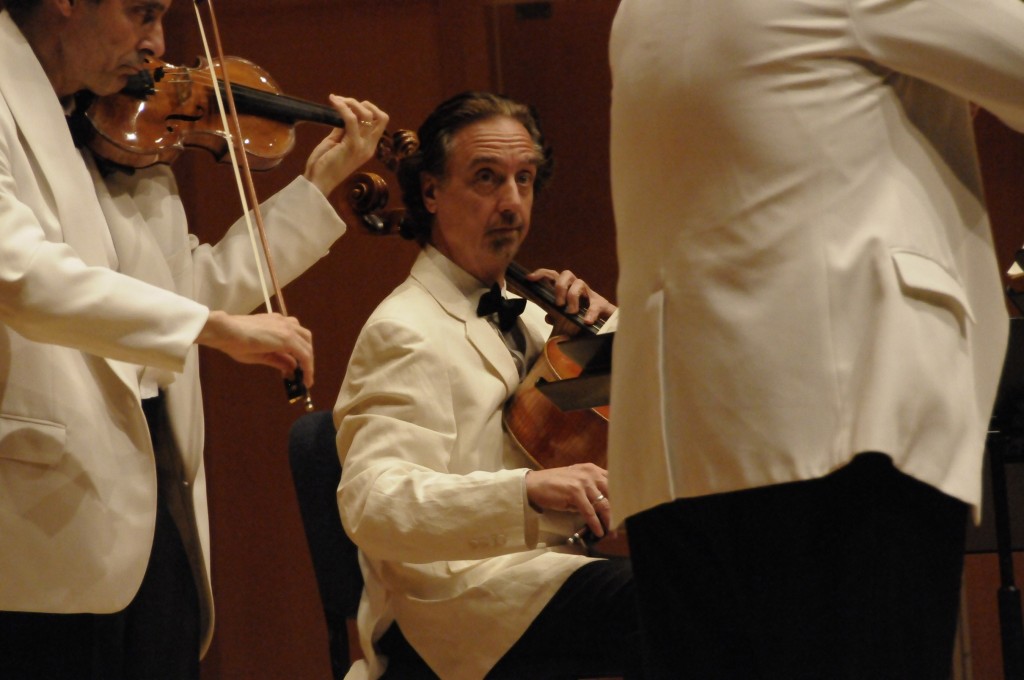
The return of Chamber Music Northwest: One of Portland’s most congenial summer traditions returns Monday night for its 38th season, and we’re not afraid to say we’re looking forward to it. Sure, the crowd’s heads are largely streaked with silver, but these are geezers (and we count ourselves as part of that category) who know a good time when they see one. Great musicians playing great music under very Portland-friendly conditions: no leader onstage, just a small group of talented artists working on something together, and paying attention to the nuances that requires. Scatter pal David Stabler gives details in The Oregonian; we’re looking forward to festival vet Fred Sherry doing a little Wuorinen and Schoenberg’s first 12-tone quartet on July 12.

Through July 27; Reed College and Catlin Gabel School. (The photo is of cellist Sophie Shao and pianist Pei-Yao Wang in last summer’s “Schubertiade.”)

Scatter’s got fly IQ, Mahler 9 and other numbers

Filed under:Environment, General, Music — posted by Barry Johnson on June 7, 2008 @ 7:56 am

We are SO species-centric. It’s all about US, homo sapiens, and when it’s not about ALL of us, it’s about our specific, little cultural norms. The buzzing you hear in our cognitive apparatus? We’re it. Buzz. Buzz. More buzz.

I’m referring particularly to the Discovery.com post entitled “Dumb Flies Live Longer Than Clever Ones.” The key finding of the University of Lausanne study: “negative correlation between an improvement in a fly’s mental capacity and its longevity”. And what was the “improvement” in the fly’s mental capacity? Why, a course of study, Pavlovian in design, that “taught” the flies to connect certain smells with food. The life loss was significant. Natural flies live 80-85 days; the smart flies only 50-60.

The researchers accounted for the lifespan deficit with an obvious, to them, conclusion — that increased neuronal activity drained their life-support systems. Not so fast Swiss scientists! What about the Pavlovian training itself? The rewards and punishments. Learning “unhelpful” connections. The sheer fly confusion. The sheer fly coercion. That takes its toll — ask any high school student — and by itself could account for early death. I’m only half-joking.

Mahler 9 Not to be Art Scatter-centric or unduly self-referential or too much like a Swiss scientist, but we read with interest a recent review in the New York Times of Mahler’s Ninth Symphony by critic Anthony Tommasini and noted that he had not taken to heart our own musings on the limitations of connecting biography to music. Frankly, I just don’t see what Tommasini has added to the discussion other than that he was pleased that Lorin Maazel’s clear or “Apollonian” approach seemed to work just fine with such “intense and transcendent” music. He spends most of the article rehashing the upsets in Mahler’s life at the time he composed the symphony and converting that biography into quasi-musical description: He imagines Mahler by turns gazing into the abyss with resignation and then sneering at death — in the music. I maintain that this is simply silly: Point to me the moment that you think he’s sneering at death and I will come up with an equally colorful, biographical and unprovable “explanation”: He awoke from his nap with a crick in his neck, for example. OK, maybe not colorful exactly. Or poetic. But it may be every bit as true as the “sneering at death” line.

94 in 4 To keep to our Scatter-centric theme: Our very unofficial record-keeping system at Art Scatter has revealed that we have been in existence something on the order of 4 months and we’ve formulated 94 posts. We’ve been SO busy! (Admittedly, some of these posts were merely stating the obvious: Hey, the server was down!) We’ve gotten lots of response, much of it positive (thank you!), and that has kept us bent to our chores. Is it possible to do somewhat longer, free-ranging “takes” on the web and find willing readers? Are we the right “Swiss scientists” to conduct the experiment? So far, the answers would be, in order, “yes” and “I dunno…maybe”. At any rate, we’ll keep at it this summer, though perhaps not at the same rate due to vacations, weddings, new grandchildren, anniversaries, grilling catastrophes, and other transitions. Stay tuned!


next page