We’ve added a couple of updates below, as jazz bloggers around the country start to weigh in on the collapse of the Portland Jazz Festival.
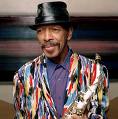 Today’s paradox: Portland has a small and by some measures thriving jazz scene; and Portland can’t keep a national-class jazz festival going to save its buttons. Today’s announcement — that the Portland Jazz Festival will “cease operations” next week unless a sponsoring sugar daddy is found who will take a $100,000 plunge — was one of those depressing pieces of news that reminds us just how fragile our arts bubble is. It’s hard for me to imagine this year without Ornette Coleman in it, and Ornette was here only because of the PJF. He came at just the right time for me, just as I was thinking seriously about the problem of creativity, and I loved his utter pragmatic dedication to sustaining his creative flow.
Jazz is one of the most frequently employed metaphors for creativity: the way it adapts and re-adapts, uses and reuses, improvises on the spot; the paradoxes it supports in the ordinary course of business, like its insistence on being in the moment and above the moment at the same time; its recognizable collision of technique, inspiration, individual play and teamwork; and well, we could go on. And maybe on that ground alone, as a metaphor, never mind the music and its place in our cultural history, I would argue for the PJF. We are beginning to understand how critical imagination and its practical application are to everything we do, especially in a city like Portland, which must live by its wits, not by its oil fields; jazz allows us to think about that in an especially delightful way. Somebody in Portland designed a better boot after hearing Ornette, I’m sure of it!
Back to the first paradox. We have excellent musicians here, though not TONS of them. I know they are excellent because I’ve heard the big name national players via the jazz festival and our musicians are in the ballpark with them. And we have quite a few clubs to support them, not that I’m expert in the economics of the local scene or how it might be improved. But since the collapse of the first big incarnation of the Mt. Hood Jazz Festival (which has been climbing back in recent years), we’ve had a hard time bringing those big national players to town. My suspicion is that their fees are enormous, so high that only the big outdoor festivals and larger indoor halls can support them. So PJF needs a major sponsor to make ends meet. Maybe the festival could have done a better job replacing Qwest than they did. I don’t know, though it seems likely. But a better canvas and pitch to likely possibilities might not have done any better.
The festival board insists that it wants a “world-class” festival. Of course, it’s possible to be world-class without bringing in the few fragile jazz giants remaining in circulation. Or the few big-name bands and players that command astronomical prices. And the alternative doesn’t have to be local players, either. Aren’t there younger or less-well-known musicians on the West Coast and around the country that would play here? A Seattle festival wouldn’t be poorer for having Nancy King or Mel Brown in it, would it? Are Portland fans knowledgeable enough to understand that? Maybe.
When the economy starts to stumble, the arts go into free fall. We are starting to hear rumblings of other groups in trouble, major arts organizations, even though Portland has been spared the worst of the recession so far (not to invite an argument about what constitutes a recession; I suppose it’s always a recession for someone). And before it’s over, they are going need the creativity of jazz to figure things out. I’d suggest popping Ornette’s Sound Grammar on the Victrola and then waiting for a good idea…
UPDATE 1: Doug Ramsey talks about the demise of the jazz festival in his Rifftides blog on ArtsJournal, ending by praising Bill Royston, the festival’s founder and artistic director. Sometimes we forget that Portland events have ramifications in the “outside” world. The jazz network will have to sort out whether the troubles of the PJF were simply local circumstances or part of a larger pattern.
UPDATE 2: And Howard Mandel, who interviewed Ornette in February at the jazz festival, writes a longer analysis on his blog, Jazz Beyond Jazz. The key paragraph:
If a widely admired and well-attended jazz festival which spotlighted a newly robust city to tourists and incurred no debt can fail because a corporate title sponsor pulls out and no replacement can be found, what does this augur for other corporate-supported fests and cultural institutions? In Chicago, corporate title support for the annual Jazz Festival comes from a coalition founded by The Boeing Company, Kraft Foods, JP Morgan Chase (formerly Bank One) and the Chicago Community Trust; it now comprises 12 members including the MacArthur, Joyce and Donnelly Foundations and United Airlines. Clearly, the more players the less damage done if one drops out.
Which is excellent advice: Businesses, even big ones, are too volatile to depend on for consistent support; that’s why having more of them on board is so important. PJF was not unaware of this, I suspect.